Seeing extra hair on the pillow, shower drain, or comb often triggers an immediate search for oils, supplements, serums, and hair-growth procedures. Yet increased shedding has many possible causes, and choosing treatment without identifying the reason can lead to months of ineffective experimentation.
For people experiencing hair concerns in Malleshwaram, Bengaluru, a systematic checklist can make hair fall treatment more focused.
Check How Long the Hair Fall Has Continued
Temporary shedding after illness, fever, surgery, significant stress, rapid weight changes, or nutritional disruption can behave differently from progressive pattern hair loss.
Think about when the shedding started and whether anything significant occurred in the preceding months.
Look at the Pattern
Hair loss is not always uniform.
Ask yourself:
- Is the central part becoming wider?
- Are the temples receding?
- Is hair density decreasing across the scalp?
- Are there clearly defined bald patches?
- Is hair breaking rather than shedding from the root?
These patterns can provide useful clues during a dermatological assessment.
Check the Scalp
Dandruff, redness, scaling, itching, painful bumps, and other scalp symptoms should not be ignored.
Scalp inflammation can coexist with hair shedding and may need separate treatment.
Review Diet and General Health
Hair growth depends on normal biological processes throughout the body. Nutritional deficiencies and certain medical conditions may contribute to shedding in some individuals.
Depending on history and clinical findings, a doctor may consider whether further evaluation is necessary.
Taking supplements without identifying a deficiency is not automatically beneficial.
Review Hair-Care Practices
Frequent chemical processing, excessive heat, tight hairstyles, repeated straightening, and aggressive brushing can contribute to hair damage and breakage.
Reducing avoidable physical stress on the hair shaft can be an important part of a broader hair-care plan.
Assess Family History
Pattern hair loss commonly has a genetic component.
A family history of progressive thinning may therefore be relevant, although the exact pattern and severity can vary considerably between individuals.
Understand the Treatment Options
Hair fall treatment is not limited to one procedure.
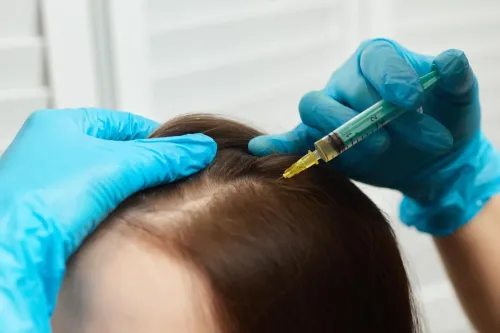
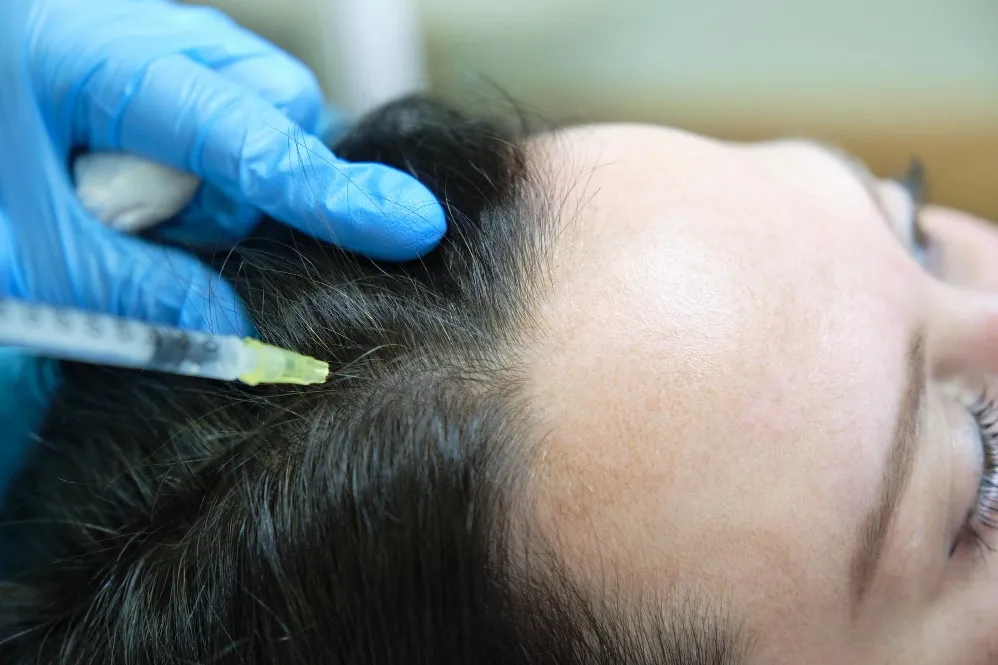
Depending on the diagnosis, management may include medicines, scalp treatment, nutritional correction when indicated, changes to hair-care practices, and procedures such as PRP or GFC in appropriately selected cases.
Skin Astetics Clinic evaluates the pattern of hair loss and scalp condition before discussing suitable options.
Know When Professional Assessment Is Useful
Consider evaluation when hair fall is persistent, rapidly worsening, creating visible thinning, producing bald patches, or occurring alongside significant scalp symptoms.
Early assessment is also useful when there is uncertainty about whether the problem is shedding, breakage, or progressive follicular miniaturisation.
People in Malleshwaram experiencing ongoing hair fall can benefit from treating the cause rather than relying solely on general hair-growth products. A clear diagnosis provides a stronger foundation for deciding which therapies deserve consideration and which may add little value.
Keywords