Repeated breakouts need more than a stronger spot cream: the pattern may point to acne, folliculitis, perioral dermatitis, rosacea, or an infection requiring a different treatment. By the end, you will know how clinicians identify persistent acne, use topical and oral options safely, and decide when a regimen needs review or escalation.
Key takeaways
- Confirm recurring bumps are acne before starting treatment.
- Use topical medication consistently and apply it to breakout-prone skin.
- Choose oral treatment when acne is deep, widespread, scarring, or resistant.
- Reassess treatment when acne worsens, causes side effects, or fails to improve.
Is It Acne or Another Cause of Repeated Bumps?
Recurring acne produces new lesions over weeks in familiar areas, often with blackheads, whiteheads, red papules, pustules, or deeper tender nodules. Occasional pimples are isolated events that clear without a continuing pattern; repeated breakouts need a diagnosis before you choose treatment.
| Pattern | Features that point toward it |
|---|---|
| Acne | Mixed lesions, including comedones, on the face, chest, back, jawline, or hairline; lesions appear in crops. |
| Folliculitis | Small, similar-looking bumps or pustules centred on hairs, often itchy or triggered by shaving, friction, sweat, or occlusive clothing. |
| Perioral dermatitis | Tiny red bumps around the mouth, nose, or eyes, with burning or scaling; the immediate lip border is often spared. |
| Rosacea | Central facial flushing, persistent redness, warmth, visible vessels, or acne-like bumps without blackheads or whiteheads. |
| Skin infection | Rapid expansion, marked warmth, swelling, worsening pain, pus, honey-coloured crust, red streaking, or fever. |
A perioral dermatitis treatment comparison matters because acne products, especially retinoids and benzoyl peroxide, can aggravate perioral dermatitis. Rosacea also needs different care from acne, while folliculitis may require attention to shaving, friction, yeast, or bacteria rather than comedone-focused treatment.
Seek prompt medical assessment for rapidly spreading redness, severe pain, fever, facial swelling, eye involvement, or a cluster of pus-filled lesions. A clinician can examine the distribution and lesion type, review new cosmetics or medicines, and decide whether testing or a skin swab is needed.
What Persistent Acne Looks Like and How Treatment Progresses
Persistent acne symptoms usually mean new lesions keep appearing for weeks or months, rather than one isolated pimple. Clinically, severity increases when lesions persist, scar, or leave dark marks.
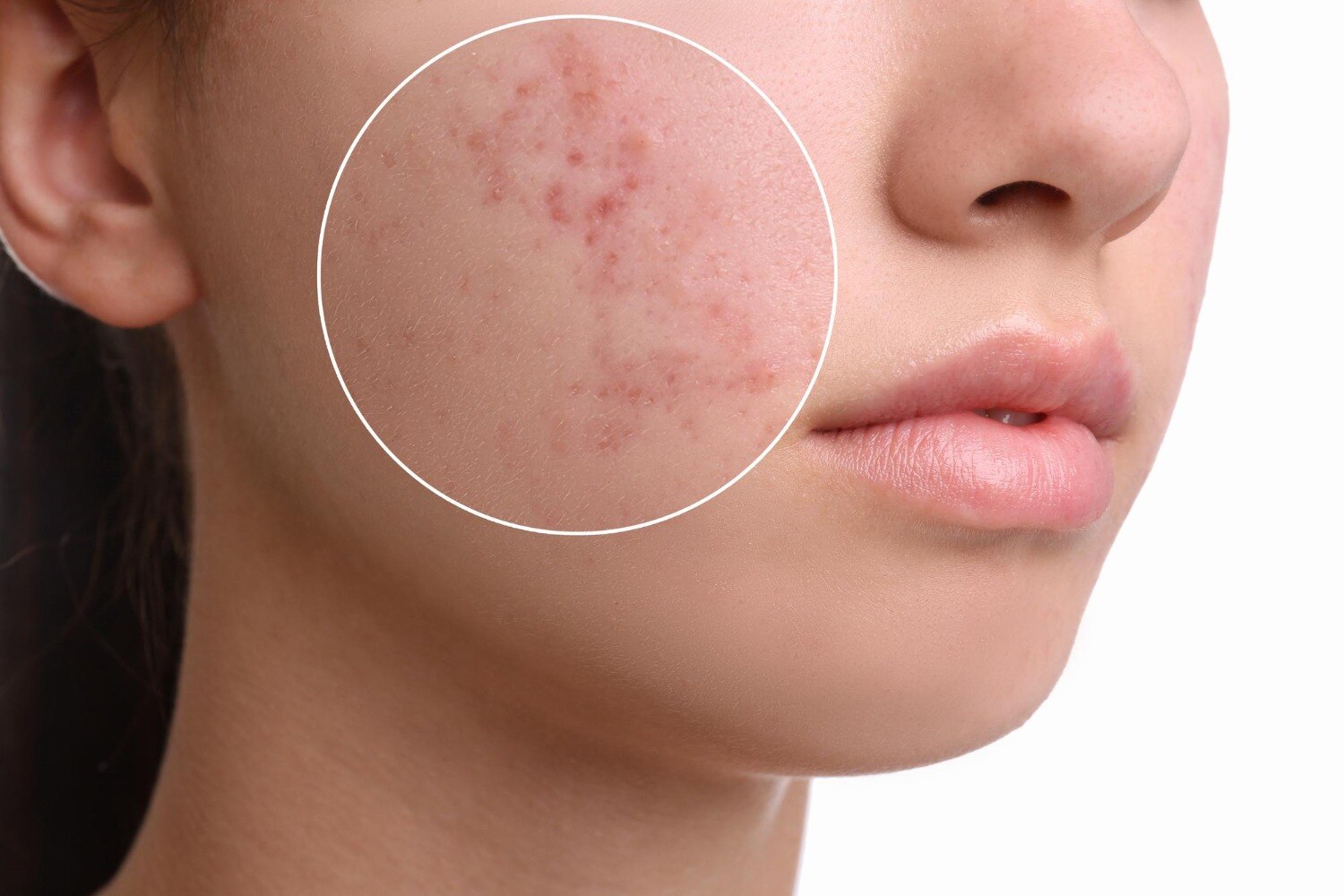
- Assess the pattern, distribution, lesion types, scarring, medications, menstrual pattern, and picking or squeezing. Look for comedones, inflammatory papules and pustules, and acne nodules and cysts, including clusters along the jawline or hairline.
- Confirm the diagnosis through a skin examination and history. Check whether a medication, hormonal pattern, or another condition is driving the eruption.
- Start treatment matched to severity and tolerance, usually with a topical retinoid, benzoyl peroxide, azelaic acid, or a suitable combination. If an antibiotic is used, pair it with benzoyl peroxide rather than using antibiotic treatment alone.
- Review progress after 6–8 weeks for early improvement and at 12 weeks for the main treatment decision. Check adherence and irritation before declaring treatment ineffective.
- Escalate when acne remains active, scarring develops, or disease is extensive. Options include oral doxycycline with benzoyl peroxide, hormonal treatment for selected adult women, or isotretinoin for severe, scarring, or treatment-resistant acne.
- Maintain the result with the effective topical regimen and gentle daily skin care, even after new lesions decrease.
Picking, squeezing, aggressive scrubbing, and stacked irritating products can prolong inflammation. Comedone extraction, peels, light, and laser treatments are adjuncts; treat active acne first because procedures do not prevent new lesions.
Choosing and Using Topical Acne Medication
Use a retinoid across the entire acne-prone area to prevent recurring lesions, not only on visible pimples. Adapalene and tretinoin unclog pores and reduce new comedones; benzoyl peroxide targets acne-causing bacteria and inflamed spots; azelaic acid helps acne and leftover dark marks.
| Option | Main target | Practical use |
|---|---|---|
| Adapalene | Comedones and recurring inflammation | Thin evening layer; begin on alternate nights |
| Tretinoin | Comedones and persistent acne | Prescription retinoid; increase gradually as tolerated |
| Benzoyl peroxide | Inflamed pimples and bacterial load | Use as a wash or thin leave-on layer; pair with antibiotics |
| Azelaic acid | Acne, redness, and dark marks | Useful when retinoids irritate or pregnancy-compatible options are needed |
- Wash gently, pat dry, and wait until skin is fully dry before applying adapalene or tretinoin; damp skin increases stinging.
- Use a pea-sized amount for the whole face, avoiding eyelids, nostril creases, lips, and broken skin.
- Start every other night for two weeks, then increase to nightly if peeling and burning remain mild.
- Apply a fragrance-free moisturiser after treatment; use SPF 30 or higher each morning.
- Introduce one active product at a time. Reduce frequency if cracking, swelling, or intense burning develops.
Topical clindamycin should not be used alone because benzoyl peroxide lowers antibiotic-resistance risk. Avoid topical retinoids during pregnancy; confirm every acne product with your clinician.
When Oral Acne Treatment Makes More Sense
Topical treatment alone stops being enough when acne is widespread, painful, leaving dark marks or scars, or still producing new inflammatory lesions after an adequate topical trial. A dermatologist may add oral acne treatment after confirming the diagnosis, reviewing pregnancy plans, medicines, medical history, and the risk of scarring.
- Doxycycline for acne suits moderate inflammatory acne with papules, pustules, or deeper tender lesions. Use it with a topical retinoid or benzoyl peroxide, not as a stand-alone cure. Tetracyclines are avoided during pregnancy and can cause stomach upset and sun sensitivity; take doxycycline with plenty of water and do not lie down immediately afterwards.
- Hormonal acne treatment fits adult women whose breakouts cluster on the jawline or lower face or worsen around menstruation. A combined oral contraceptive or another hormonal option requires review of clotting risks, migraines, blood pressure, smoking, and pregnancy plans.
- Spironolactone and acne treatment may be considered for persistent hormonally patterned acne in selected women. It is not used during pregnancy, and your clinician may check potassium or review interacting medicines.
- Isotretinoin is reserved for severe acne, acne that threatens permanent scarring, or acne that has not responded to appropriate topical and oral treatment. It is not a stronger first choice for occasional pimples and requires strict pregnancy prevention and medical monitoring.
When an antibiotic is prescribed, combine it with benzoyl peroxide to reduce resistance and review the regimen at 12 weeks. Avoid antibiotic-containing treatment beyond six months except in exceptional circumstances. SKIN ASTETICS CLINIC can help match escalation to lesion type, scarring risk, pregnancy status, and previous treatment response.
How Long to Try Treatment and When to Reassess
Judge most acne regimens after 6–8 weeks, then arrange a formal review at 12 weeks. Abandoning treatment after a few days mistakes normal treatment lag for failure; no meaningful improvement by 12 weeks calls for reassessment of the diagnosis, application technique, adherence, and treatment strength.
| Change you notice | What it may mean | What to do |
|---|---|---|
| Mild dryness, peeling, or stinging | Irritation from a topical retinoid, benzoyl peroxide, or acid | Reduce frequency, use a bland moisturiser, and ask whether a gradual restart is appropriate |
| Swelling, blistering, severe pain, widespread rash, or breathing difficulty | Harmful reaction rather than expected adjustment | Stop the suspected product and seek prompt medical advice; breathing difficulty needs urgent care |
| No improvement at 12 weeks, new nodules, or scarring | The plan needs reassessment or escalation | Arrange a clinician review instead of repeatedly adding products |
| Antibiotic-only treatment or use beyond 12 weeks | Greater antibiotic resistance risk | Use benzoyl peroxide alongside an antibiotic when prescribed, and avoid antibiotic regimens beyond six months except in exceptional circumstances |
| Isotretinoin treatment with abnormal symptoms or test results | Monitoring concern | Contact the prescriber; isotretinoin monitoring includes scheduled pregnancy checks where relevant and clinician-ordered blood tests |
After improvement, continue acne treatment maintenance to prevent relapse. Isotretinoin monitoring and antibiotic reviews follow the prescriber’s schedule, not an over-the-counter timeline.
Frequently asked questions
How can you tell whether repeated bumps are acne?
Acne commonly causes blackheads, whiteheads, red papules, pustules, and tender nodules in recurring areas. Similar-looking bumps can have other causes, so seek a diagnosis before treatment.
What does persistent acne look like?
Persistent acne produces new lesions over several weeks, often alongside older spots that have not cleared. Deep nodules, widespread inflammation, scarring, and recurring breakouts indicate a need for medical assessment.
How should you choose and use topical acne medication?
Choose medication based on the lesion type, severity, skin sensitivity, and diagnosis. Apply it consistently as directed to acne-prone areas rather than only to visible spots, and monitor irritation.
When is oral acne treatment more appropriate?
Oral treatment makes more sense for deep or widespread acne, painful nodules, scarring risk, or acne that has not responded adequately to topical treatment. A dermatologist must select and monitor these medicines.
How long should you try acne treatment before reassessing?
Use treatment consistently for the period recommended by your dermatologist, then reassess progress, new lesions, irritation, and scarring. Seek review sooner for severe side effects or rapidly worsening acne.