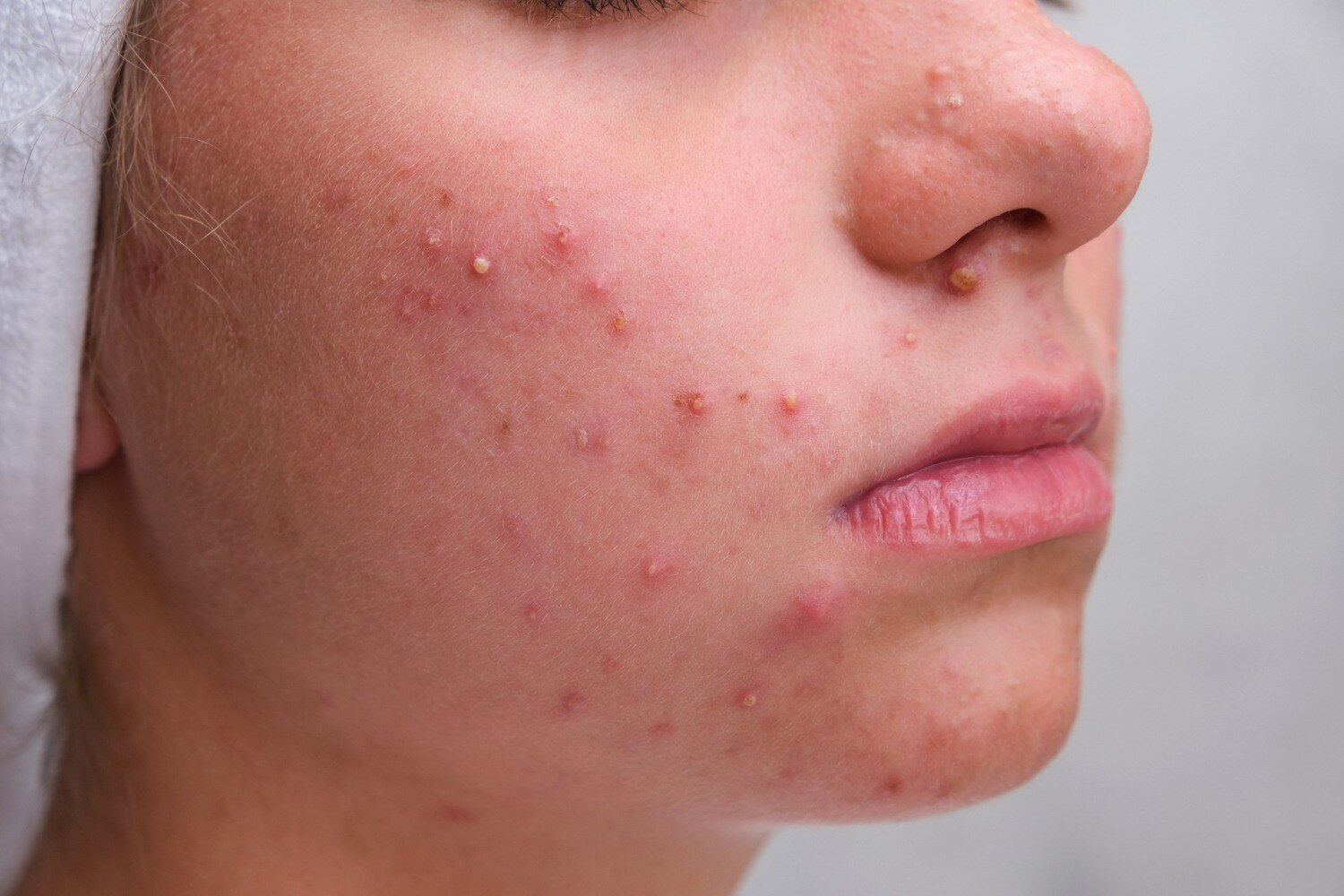
A few isolated whiteheads do not demand the same response as recurring inflamed spots, deep tender lumps, or acne that leaves marks. You will learn how to judge urgency, use over-the-counter ingredients safely, and recognise when a dermatologist should take over.
Key takeaways
- Assess acne that recurs, hurts, scars, or affects daily life.
- Try consistent home care for 8 to 12 weeks before judging results.
- Seek prescription treatment when acne persists despite correct home care.
- Ask about scarring risk, treatment options, side effects, and follow-up timing.
When do occasional pimples become acne worth assessing?
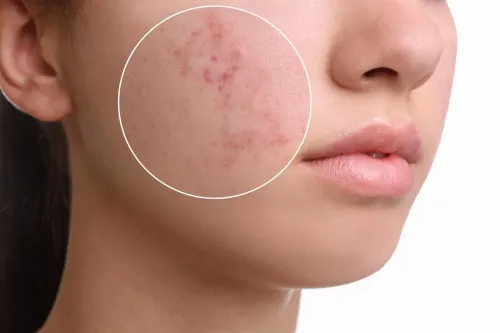
Move beyond watchful waiting when frequent pimples stop behaving like isolated events and start recurring in a pattern. Arrange an assessment if you have:
- Recurring acne with inflammatory papules and pustules over several weeks
- Breakouts that continue for several weeks despite a gentle routine
- Persistent nodules or cyst-like lesions, which need more attention than surface pustules versus cysts and nodules
- Spots that leave post-inflammatory hyperpigmentation, depressed scars, or raised scars
- New spots appearing often enough to disrupt cleansing, shaving, makeup, or other normal skin care
Acne severity is not measured only by spot count. A few deep, painful lesions can matter more than many small whiteheads because they reach deeper tissue and carry greater scarring risk. Seek assessment sooner if lesions remain inflamed or tender instead of settling.
A sudden, itchy, uniform eruption is not automatically acne. The same applies when bumps begin after a new medicine or supplement; folliculitis, rosacea, or a drug-induced acneiform eruption may need different treatment. Do not keep escalating acne products when the pattern is atypical. A clinician can identify the cause and prevent weeks of ineffective treatment.
Why pain, scarring, and daily impact change the timing
Deep acne lumps and cyst-like lesions deserve medical assessment sooner than a few surface whiteheads because inflammation reaches deeper skin and raises the risk of permanent acne scarring. Painful pimples that recur, enlarge, or remain tender need attention rather than repeated over-the-counter trials.
Seek prompt review if you notice:
- Acne worsening rapidly
- Drainage from a lesion
- Marked tenderness or deep, painful lumps
- Atrophic dents or raised scars
- Inflammation that remains for weeks
- Acne disrupting sleep, mood, confidence, social activity, work, or study
Waiting allows prolonged inflammation to damage collagen, leaving permanent atrophic or raised scars. Healing can also produce post-inflammatory hyperpigmentation, which appears as dark marks after the spot has flattened and can last far longer than the breakout.
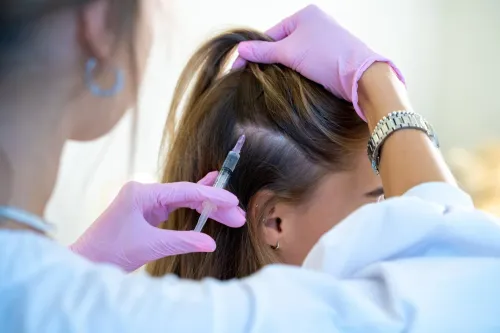
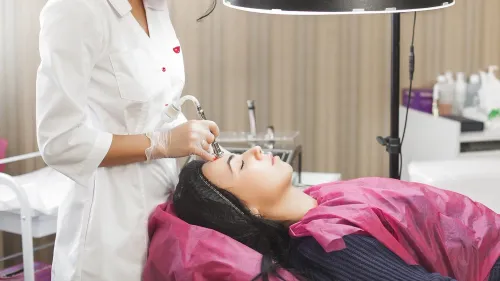
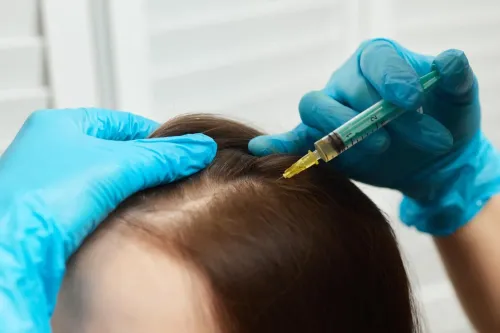
Do not squeeze, pick, or repeatedly extract inflamed lesions. Added pressure and skin injury increase inflammation and scarring risk, and can spread bacteria into nearby tissue. A clinician can decide whether a selected-lesion injection or comedone extraction is appropriate, but procedures do not control the acne process that creates new lesions.
What can you try at home, and when should you judge the result?
Cleanse gently, apply a non-comedogenic moisturiser, and use broad-spectrum sunscreen every day. Add only one active ingredient at first, introduced gradually; using several at once makes irritation harder to identify and manage.
| Option | Best suited to | Important practical point |
|---|---|---|
| Benzoyl peroxide | Red, inflamed spots | It bleaches fabric and hair. Start on alternate nights or wash off after short contact if your skin burns, peels, or becomes very dry. |
| Adapalene | Comedones and preventing new breakouts | Use at night and introduce gradually. Ask a clinician before using it or another retinoid during pregnancy, while trying to conceive, or when breastfeeding. |
| Salicylic acid | Blocked pores and blackheads | Begin with a lower-frequency application; excess use can cause dryness without clearing acne faster. |
| Azelaic acid | Acne accompanied by dark marks | It can address breakouts and post-inflammatory pigmentation, but still needs gradual introduction if you are sensitive. |
Do not increase the amount or frequency when irritation appears. Reduce use to alternate nights or try short-contact application, then rebuild slowly once your skin settles.
New spots can decrease before the full result is visible, but judge a consistent first-line routine at about 12 weeks, not after a few days. Seek review sooner for severe burning, swelling, blistering, or clearly worsening acne.
When does failed home care call for prescription treatment or investigation?
Failed home care calls for prescription acne treatment or investigation when a properly used 12-week routine still produces new lesions, inflammation worsens, or scarring develops despite treatment. That is acne treatment failure, not a reason to keep buying more products.
Antibiotic creams or tablets should not be used alone because this increases antimicrobial-resistance risk and does not address blocked pores. Regimens containing antibiotics need review at 12 weeks so a clinician can stop, change, or extend treatment only for a clear reason.
Oral antibiotics for acne are usually paired with benzoyl peroxide or another suitable topical treatment.
A clinician may consider:
- Hormonal treatment when hormone-sensitive acne or androgen-related features fit the assessment.
- Oral antibiotics for more inflamed or extensive acne, with review and a defined treatment course.
- Specialist-monitored isotretinoin for severe, scarring, or treatment-resistant acne.
Isotretinoin safety requires strict safeguards: it is prohibited during pregnancy, and anyone who could become pregnant must follow pregnancy-prevention and testing requirements. Tell the clinician about pregnancy, breastfeeding, or plans to conceive before discussing it.
Adult acne with irregular periods, excess facial or body hair, or scalp thinning warrants assessment for polycystic ovary syndrome or another hormonal disorder. Acne alone does not establish PCOS, but these accompanying signs make investigation useful.
What should you ask for at a dermatology assessment?
Bring a written timeline to your dermatology consultation for acne. It helps a dermatologist distinguish ordinary acne from folliculitis, rosacea, or a drug-induced acneiform eruption, especially when spots are sudden, itchy, uniform, or follow a new medicine or supplement.
Record these details before your appointment:
- Products tried, including names, strengths, and how often you used them
- Start and stop dates for each product, plus any burning, peeling, or rash
- Prescription medicines, over-the-counter drugs, vitamins, protein supplements, and herbal products
- Menstrual changes, irregular periods, excess facial hair, or scalp thinning
- Pregnancy, plans to conceive, or breastfeeding
- Dark marks, dents, raised scars, drainage, and painful deep lesions
- Effects on sleep, mood, confidence, social activity, work, or study
| Assessment detail | What the dermatologist decides | Why it matters |
|---|---|---|
| Comedone extraction | Whether blocked pores need careful removal | It does not stop new acne |
| Selected-lesion injection | Whether one painful nodule needs targeted treatment | It is an adjunct, not a substitute for acne control |
| Maintenance plan | Which acne maintenance treatment suits your skin | Relapse is common after improvement |
Do not repeatedly extract inflamed spots yourself. A Bengaluru dermatologist can match treatment to the pattern and risks; Skin Astetics Clinic is a Bengaluru option for a personalised assessment when acne is frequent, painful, scarring, or distressing.
Related service
Acne Clinic in Rajajinagar, Bangalore Welcome to Skin Astetics Clinic, your trusted destination for effective and advanced Acne & Acne Scar Management in... View service → |
Frequently asked questions
When do occasional pimples become acne worth assessing?
Arrange an assessment when pimples recur in a pattern, continue appearing, or become frequent rather than isolated.
Why do pain, scarring, and daily impact change the timing?
Painful lesions, scars or dark marks, and disruption to sleep, confidence, work, or social life justify earlier assessment.
What can you try at home, and when should you judge the result?
Use a gentle cleanser, non-comedogenic moisturiser, sunscreen, and a suitable acne treatment consistently for 8 to 12 weeks before judging the result.
When does failed home care call for prescription treatment or investigation?
Seek dermatology care when consistent home treatment fails, acne is painful or scarring, or another medical cause or medication may be contributing.
What should you ask for at a dermatology assessment?
Ask for the acne type and severity, scarring risk, treatment choices, expected timeline, side effects, skincare instructions, and follow-up plan.