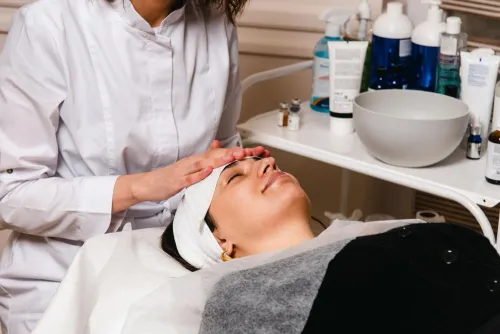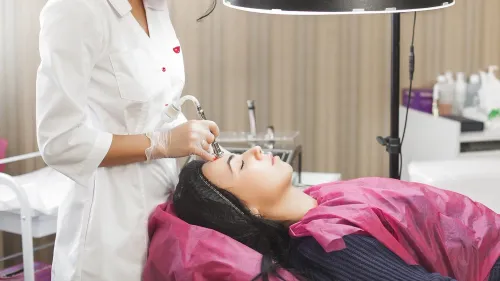
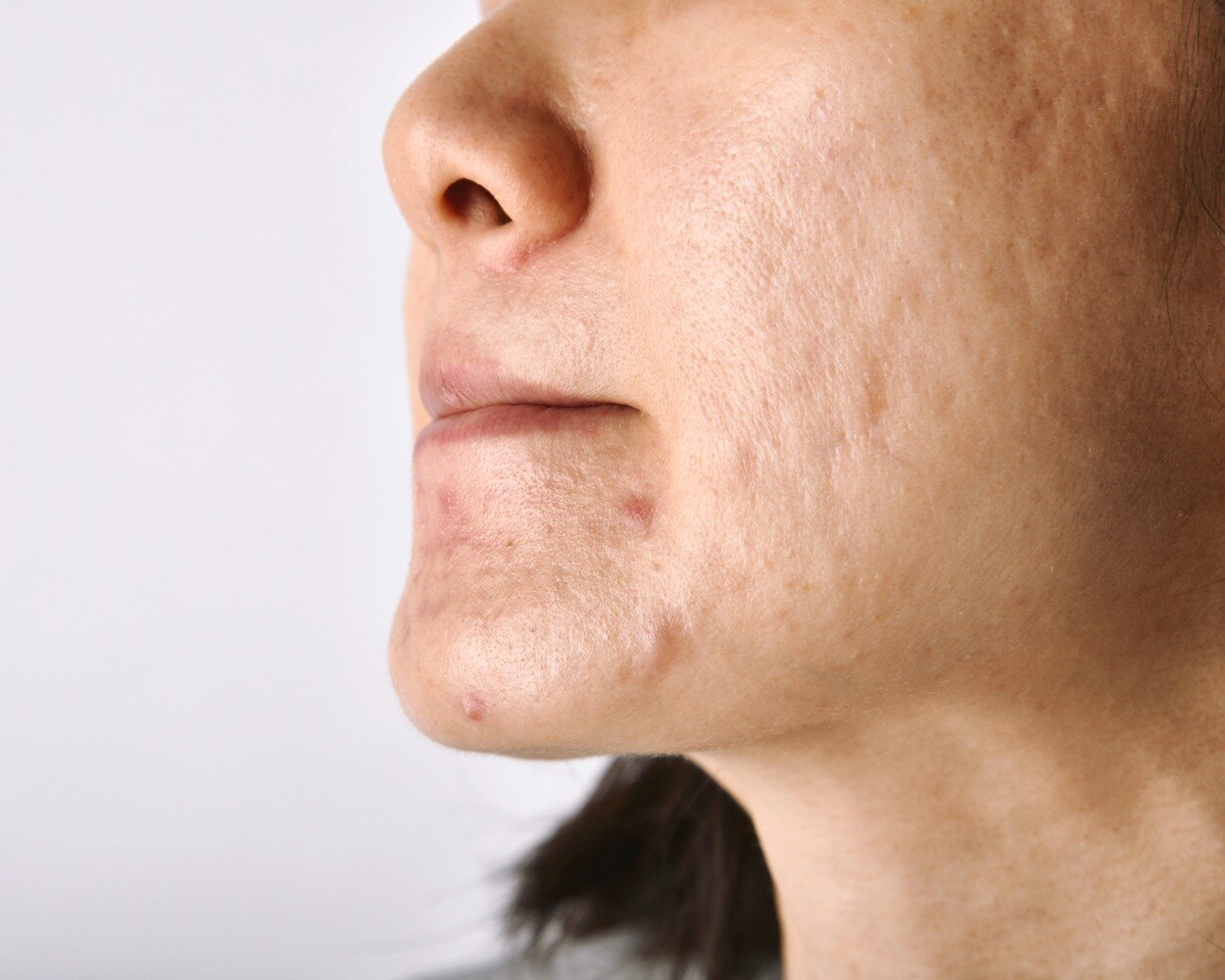
Uneven skin after acne can mean a depressed scar, a raised scar, enlarged pores, temporary roughness, or only a red or brown mark. Identifying the pattern first helps you choose between skincare, resurfacing, scar-release procedures, injections, or staged combination treatment—and avoid a procedure that cannot address the problem.
Key takeaways
- Side lighting reveals dips, edges, and tethered scars better than direct daylight.
- Treat redness or pigmentation differently from indented or raised scar tissue.
- Ask about skin type, active acne, medications, and downtime before choosing treatment.
- Compare improvement, recovery time, repeat sessions, and safety—not price alone.
Is it a scar, a red mark, or a brown mark?
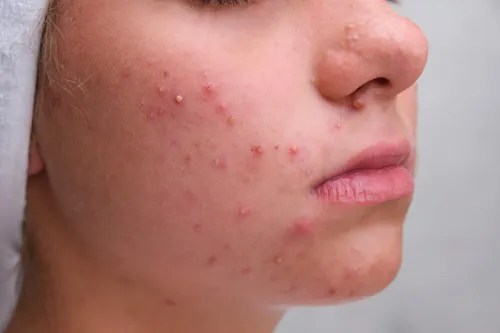
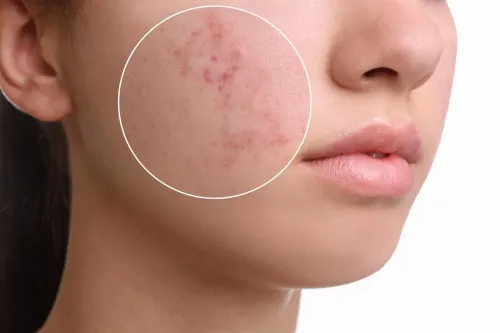
Check the area in daylight, then shine light across it from the side. A true change in post-acne skin texture creates a visible dip, edge, or tethered shadow; a colour mark leaves the surface level.
| Appearance | Simple check | Likely change |
|---|---|---|
| Flat red, pink, or purple spot | It lightens temporarily when pressed | Post-inflammatory erythema, not a scar |
| Flat tan, brown, or grey spot | It does not rise or dip, and does not blanch with pressure | Post-inflammatory hyperpigmentation, not a scar |
| Narrow, deep pit | The opening looks small but the depression extends downward | Ice-pick scar |
| Wider depression with sharp, defined edges | Side lighting shows a distinct, scooped-out border | Boxcar scar |
| Broad, shallow dip with a soft, undulating edge | Stretching the skin can reduce the dip, revealing tethering | Rolling scar |
| Firm bump extending above the surrounding skin | It feels thick or hard rather than indented | Raised hypertrophic scar or keloid |
Atrophic acne scars are depressed scars, including ice-pick scars, boxcar scars and rolling scars. Enlarged pores and temporary roughness after active acne can look uneven but lack a fixed depression.
Do not judge while new pimples are inflamed or crusted. Active acne changes the surface and can create additional scars, so control it before measuring the lasting problem. Red and brown marks need colour-focused management; resurfacing a depression alone will not reliably remove them.
Which treatment matches each acne-scar pattern?
The right acne scar treatment options depend on depth and attachment, not the number of marks. Topical retinoids suit mild roughness or enlarged pores, but they will not lift established depressions. Control active inflammatory acne before procedures, or new lesions can create fresh scars.
| Pattern | Suitable treatments | Key limitation |
|---|---|---|
| Mild unevenness | Topical retinoids; microneedling for acne scars; fractional laser resurfacing | Improvement is gradual; retinoids work best for surface texture, not deep pits |
| Depressed ice-pick scars | TCA CROSS; selected punch excision or punch elevation | TCA CROSS targets individual pits, not the whole face; poorly controlled acid can cause pigment change or extra scarring |
| Depressed boxcar scars | Microneedling; fractional laser; punch elevation or excision for deep, sharply edged scars; fillers for selected defects | Shallow scars respond differently from deep focal scars, which need dermatosurgery |
| Tethered rolling scars | Subcision, sometimes followed by filler or resurfacing | Releasing fibrous bands is the key step; resurfacing alone may leave the depression attached |
| Raised hypertrophic scars or keloids | Intralesional corticosteroid injections; silicone gel or sheets; pressure, cryotherapy, vascular laser, or selected surgery | Excision alone can trigger recurrence, especially with keloid tendency |
Most depressed scars improve rather than disappear. Microneedling, laser, subcision, TCA CROSS, and fillers usually require planned sessions, with results emerging as collagen remodels. A dermatologist must match the procedure to the scar pattern and your risk of prolonged redness or pigment change.
What should a dermatologist assess before treatment?
Before choosing a procedure, a dermatologist should confirm that active acne is controlled and identify whether you have texture, colour change, or both. New lesions can create fresh scars and make results difficult to judge.
1. Review your medical history: previous keloids or hypertrophic scars, cold sores, eczema, infections, poor wound healing, diabetes, pregnancy, allergies, and medicines such as isotretinoin, blood thinners, or photosensitising drugs. Tell the clinician about prior peels, lasers, fillers, and any abnormal reaction.
2. Examine each scar in good lighting and from different angles. The assessment should record ice-pick, boxcar, and rolling scars; tethering beneath rolling scars; raised scars; enlarged pores; and residual post-inflammatory hyperpigmentation or redness. Texture and colour need separate plans.
3. Match risk to skin characteristics. Indian skin and acne-scar treatment requires careful consideration of melanin response, because aggressive treatment can trigger post-inflammatory hyperpigmentation. Ask how your skin type affects settings, whether fractional laser resurfacing is appropriate, and how sun exposure will be managed.
4. Ask the provider what result is realistic, how many sessions are expected, and why one option fits your scar pattern. For tethered rolling scars, ask whether subcision for rolling scars is needed before microneedling, laser, or filler. Also ask about pain control, downtime, infection, herpes reactivation, prolonged redness, pigment changes, and who manages complications.
A consultation at SKIN ASTETICS CLINIC should leave you with a documented plan, aftercare instructions, and a clear reason to postpone treatment if acne or infection remains active.
Related services
Acne Clinic in Rajajinagar, Bangalore Welcome to Skin Astetics Clinic, your trusted destination for effective and advanced Acne & Acne Scar Management in... View service → |
Dermaroller Treatment Natural Skin Rejuvenation with Microneedling Technology At Skin Aesthetics Clinic, we offer safe and effective Dermaroller Treatment (Microneedling)... View service → |
What happens during recovery, and how long do results take?
Active acne, cold sores, or a skin infection can postpone treatment. Continuing breakouts create new scars and make improvement difficult to judge, so your clinician may first control inflammation and review medicines, pigment risk, and recent sun exposure.
- Before the appointment: arrive with clean skin and follow instructions about retinoids, acids, waxing, and tanning. Do not stop prescribed medicine without approval.
- On procedure day: numbing cream can reduce discomfort. Microneedling feels like repeated scratching or vibration; laser resurfacing brings heat, stinging, or snapping sensations. Pinpoint bleeding, redness, and swelling can occur.
- During acne scar treatment downtime: expect redness and tenderness after microneedling, with stronger or longer reactions after ablative laser treatment. Ask when makeup, exercise, and shaving are safe.
- After treatment: use the cleanser, moisturiser, and wound-care products prescribed for you. Sun protection after laser or microneedling means broad-spectrum sunscreen, a hat, and avoiding deliberate sun exposure; ultraviolet light can prolong redness and trigger dark marks.
- At follow-up: schedule the next visit only after healing is assessed. Acne scar treatment sessions are often spaced several weeks apart, depending on the procedure and your skin’s recovery.
Texture rarely changes overnight. Early swelling can briefly make scars look smoother, but lasting improvement develops through wound healing and collagen remodeling. Most depressed scars improve rather than disappear, and a series of treatments may be needed before results are judged.
How do you judge value, realistic improvement, and safer alternatives?
Judge value by the scar pattern, safety, and time required—not by the number of sessions advertised. Most depressed scars improve rather than disappear, and acne scar treatment results develop over weeks or months as collagen remodels. A single procedure is not a guaranteed permanent correction.
| Option | Strength | Limitation |
|---|---|---|
| Professional microneedling | Controlled depth for suitable shallow rolling or boxcar scars | Requires trained assessment, sterile technique, and a series of sessions |
| Home dermaroller | Lower-cost surface rolling | Uneven pressure, contamination, irritation, and post-inflammatory pigmentation can worsen texture |
| Acne scar creams | Retinoids can support mild unevenness and prevent new acne | They cannot release tethered scars or reliably fill deep depressions |
Professional microneedling versus home dermaroller is not an equivalent cost comparison: clinic treatment buys accurate depth selection and monitoring. Creams are the safer starting point for mild texture when active acne remains, but continuing breakouts should be controlled before elective procedures.
Seek evaluation before treating raised acne scars or keloid acne scars; steroid injections, silicone, pressure, lasers, or other targeted care may be needed, and cutting them out alone can trigger recurrence. Ask for assessment if a scar is painful, growing, firm, tethered, or repeatedly inflamed.
Red or brown marks also need separate advice because resurfacing may improve texture without removing their colour. Compare total cost, downtime, maintenance, and realistic improvement—not just the fee per session.
Frequently asked questions
How can you tell an acne scar from a red or brown mark?
Check the skin in daylight and with light shining from the side. A scar changes the surface with a dip, edge, or tethered shadow; a red or brown mark leaves the surface level.
Which treatment matches each acne-scar pattern?
Indented scars, raised scars, redness, and brown pigmentation require different approaches. A dermatologist matches treatment to the scar’s depth, edges, tethering, colour, and your skin type.
What should a dermatologist assess before acne-scar treatment?
The assessment should cover active acne, scar type and depth, skin tone, tendency toward dark marks or raised scars, current medicines, previous procedures, and acceptable downtime.
How long does acne-scar treatment recovery and improvement take?
Recovery depends on the procedure and treatment intensity. Redness, swelling, peeling, or temporary darkening can occur, while texture improvement develops gradually and may require multiple sessions.
How should you judge the value of acne-scar treatment?
Compare the expected improvement with session count, downtime, aftercare, risks, maintenance, and safer alternatives. A lower-cost treatment is not better if it targets the wrong scar pattern.
Related services
Chemical Peel Treatments at Skin Astetics Clinic Renew your skin and reveal a fresh, glowing complexion with professional Chemical Peel treatments at Skin Astetics... View service → |
Carbon Laser Toning / Hollywood Facial Carbon Laser Toning / Hollywood Facial at Skin Astetics Clinic Discover the secret to radiant, glowing skin with Carbon Laser Toning, popularly known as the Hollywood Facial, at Skin... View service → |
Dermatosurgery Dermatosurgery at Skin Astetics Clinic Expert Care for Skin, Nails & Minor Aesthetic Corrections At Skin Astetics Clinic, we offer a wide range of safe, minimally... |
Anti Aging Treatment Advanced Anti-Aging Treatments at Skin Astetics Clinic Featuring Exosomes, PDRNs, and Skin Boosters Turn back the clock on aging with the most... View service → |